




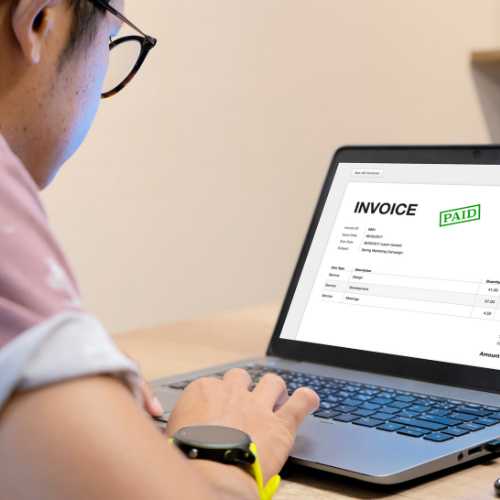


Where the Compliance Picture Was Less Complete Than Expected
The company had installed NetSuite’s Philippines localization, which Oracle documents as providing BIR-formatted invoice templates, VAT codes, VAT reports for the monthly and quarterly returns (Forms 2550M and 2550Q), printable Form 2307 and withholding tax reports and electronic books of accounts, and it works in accounts with SuiteTax enabled. Leadership assumed that meant tax compliance was handled. In practice, localization covers formatting and reporting, while Oracle’s Philippine help topics reviewed do not describe sending invoices to the BIR system. Under BIR rules, covered taxpayers are expected to issue structured electronic invoices by 31 December 2026, hold a Permit to Issue and check registration rules for computerized accounting systems, so the team had to separate what was already in place from what still needed to be built.
- Assuming Localization Meant Compliance: Formatted documents and reports were treated as if they covered every BIR duty.
- Tax Setup Drift: SuiteTax and tax code settings were edited over time without a clear owner.
- Reports Reviewed Late: VAT and withholding outputs were checked only at filing time.
- Provider and Connector Claims: Outside vendors described themselves as BIR-ready without evidence.
- Changes Breaking Outputs: Template, form and upgrade changes occasionally altered invoice or report layouts.
Key Learnings and Takeaways from the Project
Read What the Localization Actually Covers
List each BIR duty and mark whether NetSuite’s documented localization covers it, partly covers it or leaves it open. E-invoice submission to the BIR system should be treated as open until Oracle or a partner confirms otherwise in writing.
Treat SuiteTax Setup as a Controlled Asset
Give tax codes, form mappings and transaction settings a named owner, a change log and a test routine, so setup does not drift between filing periods.
Reconcile Outputs Every Month, Not Once a Year
Compare invoice listings, VAT reports, withholding data and electronic books each period, so mismatches are found while the cause is still easy to trace.
Verify Any Provider’s BIR Status Before Relying on It
Under RMC 110-2026, e-invoicing service providers are expected to be accredited by the BIR before commercially deploying their solutions, and reports indicate a taxpayer’s permit can be affected if a provider’s accreditation lapses. Ask any vendor or connector to show current status, and confirm it with the BIR.
Validate Before You Prepare Structured Data
Check mandatory fields, tax IDs, VAT classifications and totals before invoices are prepared as structured data, with JSON currently preferred by the BIR, and route them through the configured submission process once permit and certification requirements are met.
Keep Evidence and Plan for Change
Maintain linked records of transactions, corrections and submission results, and retest templates, mappings and connectors after NetSuite updates or BIR clarifications.
Advintek’s Delivery Path, Shaped by the Lessons
Advintek’s approach starts from the BIR requirement and works back to the NetSuite process that supports it. The implementation is tailored to the company’s account setup, installed SuiteApps, available interfaces and applicable business requirements.
- Build a Duty-by-Duty Coverage Map
- Stabilize SuiteTax Setup and Master Data
- Configure Validation and Reconciliation Routines
- Vet Connectors and Providers Against BIR Status
- Test Submission, Corrections and Failures
- Monitor Outputs and Retest After Changes
What These Lessons Can Deliver
Applying the lessons can help reduce surprises and keep tax outputs consistent. For a Philippine business, the value lies in a documented, repeatable process while continuing to use its estblished NetSuite environment.
- ERP Continuity: Retain NetSuite and its localization while adding structured e-invoice controls.
- Honest Coverage View: Know which BIR duties are covered, partly covered or open.
- Stable Tax Setup: Reduce unplanned changes to codes, forms and templates.
- Earlier Detection of Mismatches: Catch differences between outputs during the period, not at filing.
- Safer Vendor Choices: Rely on providers whose status has been checked.
- Organized Compliance Archive: Keep accessible records for audits, reporting and compliance documentation.
Why Businesses on NetSuite Work with Advintek
Start Your NetSuite Tax Compliance Work with the Lessons Already Learned
Philippine businesses on NetSuite can prepare for BIR e-invoicing by connecting their localized invoicing, withholding and records to configured electronic invoice workflows. Advintek helps businesses map NetSuite data, configure validation, support electronic invoice processing and organize compliance records, without requiring an ERP replacement. To explore related topics, see our guides on e invoicing netsuite and bir e-invoicing deadline. Final BIR permits, certification and system requirements must be confirmed directly with the BIR.
Explore Our Case Studies

BIR EIS registration is the mandatory gateway every covered taxpayer must complete before issuing a single electronic invoice under Revenue Regulation No. 11-2025. The BIR EIS registration process encompasses three sequential stages: EIS certification requirements review, PTI (Permit to Issue) application through BIR ORUS, and sandbox testing before live activation. This guide provides a complete […]

BIR e-invoice correction — the process of fixing errors in invoices already submitted to the BIR Electronic Invoicing System — is one of the most operationally critical aspects of EIS compliance under Revenue Regulation No. 11-2025. Unlike paper invoices where a stamp or manual correction could be made directly, BIR e-invoice correction requires formal cancellation […]

The relationship between BIR ATP and E-Invoicing — the Authority to Print and the new Electronic Invoicing System — is one of the most operationally significant compliance questions under Revenue Regulation No. 11-2025. BIR ATP e-invoicing coexistence during the transition period requires careful management to avoid penalties for issuing invalid printed invoices after EIS go-live. […]

BIR e-invoicing for small businesses under Revenue Regulation No. 11-2025 is not immediately mandatory in the initial phase — the December 31, 2026 deadline applies only to taxpayers in the RMC 98-2026 covered list (Large Taxpayers, Top Withholding Agents and registered exporters). However, BIR e-invoicing for small businesses landscape is changing rapidly, and proactive preparation […]

BIR EIS integration is the technical foundation of every covered taxpayer’s BIR Electronic Invoicing System compliance programme. A well-designed BIR EIS integration architecture ensures real-time or four-hour invoice submission, error handling, EIS confirmation tracking and five-year record archiving — all aligned with BIR RR 11-2025 requirements. This guide focuses on the technical architecture of BIR […]

Understanding BIR E-Invoicing Cost Guide 2026 is one of the first practical questions every business must answer when planning for RR 11-2025 compliance. BIR e-invoicing cost varies significantly by business size, invoice volume, integration complexity and the type of e-invoicing solution chosen — from affordable cloud SaaS platforms to full-service ESP-managed implementations for large enterprises. […]
