






Best E-invoicing Software in Philippines

Oracle Cloud ERP and E-Invoicing Integration Request a Demo Lessons from a Philippine Enterprise A Philippine enterprise running Oracle Cloud ERP completed an e-invoicing integration project to meet applicable BIR requirements. Advintek’s integration approach helps connect existing Oracle records to a validated e-invoice workflow, and this case study shares the practical lessons that emerged along the way, without replacing the company’s ERP. Philippines Content women

Where the Project Met Real Friction

The enterprise began with a simple plan: connect receivables data to an e-invoice process and go live. In practice, the team ran into questions that were not obvious at the start. Public Philippine localization guidance for Oracle Cloud ERP is limited, so BIR-specific behavior had to be confirmed rather than assumed. Under BIR rules, covered taxpayers are expected to issue structured electronic invoices by 31 December 2026 and hold a Permit to Issue, which put a fixed date on every decision and made early surprises expensive.

man see the phone

Six Lessons That Shaped the Integration

Confirm Before You Build

Write down every assumption about Oracle’s capabilities and the BIR’s requirements, then confirm each one with Oracle, the implementation partner or the BIR before design work depends on it.

Fix Data Before Automating It

Standardize customer names, tax IDs, item codes and VAT classifications first, since automation spreads bad data faster than manual work does.

Design for the Failure Path

Plan for rejected, duplicate and pending invoices from the start, with validation rules, retries and an exception queue, so errors are handled calmly instead of discovered in production.

Test the Awkward Cases Early

Run credit memos, partial billings, intercompany invoices and corrections through the workflow before the main build, since these cases drive most of the complexity. Structured output follows the BIR’s preferred JSON format and submission steps once permit and certification requirements are met.

Name an Owner for Every Step

Assign a person to the Permit to Issue, validation rules, submission monitoring and exception handling, so none of them sits between teams.

Plan for Change After Go-Live

Keep mappings, rules and connectors documented and versioned, and retest after Oracle updates or BIR clarifications, with references kept between e-invoice records and their Oracle transactions.

Manila e-invoicing Philippines

Advintek’s Delivery Path, Refined by Experience

Advintek’s approach follows each document from posting in Oracle Cloud ERP to a validated e-invoice record, and builds the lessons above into the steps. The implementation is tailored to the company’s Oracle release, available integration interfaces and applicable business requirements.

What the Lessons Can Deliver

Applying these lessons can help reduce late surprises and rework in similar projects. For a Philippine enterprise, the value lies in a more predictable path to e-invoicing while continuing to use its established Oracle environment.

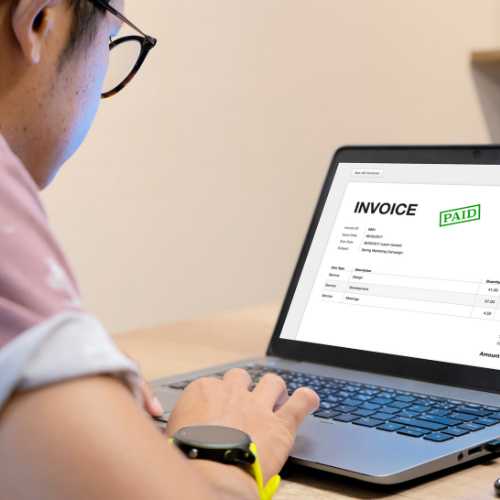
invoice see
placeholder
placeholder

Why Enterprises Seek Advintek’s Integration Experience

Advintek helps Philippine enterprises extend Oracle Cloud ERP into structured e-invoice processing through tailored integration workflows. Its expertise covers field mapping, validation rules, data transformation, submission processes and response handling, helping finance, tax and IT teams coordinate existing ERP operations with e-invoicing requirements and applicable BIR obligations.
With experience across 60+ countries, security-focused practices and 24/7 technical support, Advintek helps businesses address integration challenges and ongoing technical needs. Its approach considers the Oracle release, available interfaces and applicable Philippine BIR requirements when planning suitable workflows.

Start Your Oracle Cloud ERP E-Invoicing Project with the Lessons Already Learned

Philippine enterprises on Oracle Cloud ERP can prepare for BIR e-invoicing by connecting their receivables and tax data to configured electronic invoice workflows. Advintek helps businesses map Oracle data, configure validation, support electronic invoice processing and organize financial records, without requiring an ERP replacement. To explore related topics, see our guides on oracle cloud erp philippines and e invoicing details. Final BIR permits, certification and system requirements must be confirmed directly with the BIR.

Explore Our Case Studies

BIR EIS Registration: Complete Guide to Applying for E-Invoicing in the Philippines 2026 

BIR EIS Registration: Complete Guide to Applying for E-Invoicing in the Philippines 2026 

BIR EIS registration is the mandatory gateway every covered taxpayer must complete before issuing a single electronic invoice under Revenue Regulation No. 11-2025. The BIR EIS registration process encompasses three sequential stages: EIS certification requirements review, PTI (Permit to Issue) application through BIR ORUS, and sandbox testing before live activation.  This guide provides a complete […]

BIR E-Invoice Correction: How to Cancel, Amend and Reissue Invoices in the Philippines EIS 

BIR E-Invoice Correction: How to Cancel, Amend and Reissue Invoices in the Philippines EIS 

BIR e-invoice correction — the process of fixing errors in invoices already submitted to the BIR Electronic Invoicing System — is one of the most operationally critical aspects of EIS compliance under Revenue Regulation No. 11-2025. Unlike paper invoices where a stamp or manual correction could be made directly, BIR e-invoice correction requires formal cancellation […]

BIR ATP and E-Invoicing: Transitioning from Printed Invoices to the BIR EIS in 2026 

BIR ATP and E-Invoicing: Transitioning from Printed Invoices to the BIR EIS in 2026 

The relationship between BIR ATP and E-Invoicing — the Authority to Print and the new Electronic Invoicing System — is one of the most operationally significant compliance questions under Revenue Regulation No. 11-2025. BIR ATP e-invoicing coexistence during the transition period requires careful management to avoid penalties for issuing invalid printed invoices after EIS go-live. […]

BIR E-Invoicing for Small Businesses: Compliance Checklist, Timelines and What to Expect 

BIR E-Invoicing for Small Businesses: Compliance Checklist, Timelines and What to Expect 

BIR e-invoicing for small businesses under Revenue Regulation No. 11-2025 is not immediately mandatory in the initial phase — the December 31, 2026 deadline applies only to taxpayers in the RMC 98-2026 covered list (Large Taxpayers, Top Withholding Agents and registered exporters). However, BIR e-invoicing for small businesses landscape is changing rapidly, and proactive preparation […]

BIR EIS Integration: System Architecture, APIs and Structured Invoice Format for 2026 

BIR EIS Integration: System Architecture, APIs and Structured Invoice Format for 2026 

BIR EIS integration is the technical foundation of every covered taxpayer’s BIR Electronic Invoicing System compliance programme. A well-designed BIR EIS integration architecture ensures real-time or four-hour invoice submission, error handling, EIS confirmation tracking and five-year record archiving — all aligned with BIR RR 11-2025 requirements.  This guide focuses on the technical architecture of BIR […]

BIR E-Invoicing Cost Guide 2026: Software, Setup and Total Cost of Compliance 

BIR E-Invoicing Cost Guide 2026: Software, Setup and Total Cost of Compliance 

Understanding BIR E-Invoicing Cost Guide 2026 is one of the first practical questions every business must answer when planning for RR 11-2025 compliance. BIR e-invoicing cost varies significantly by business size, invoice volume, integration complexity and the type of e-invoicing solution chosen — from affordable cloud SaaS platforms to full-service ESP-managed implementations for large enterprises. […]
